
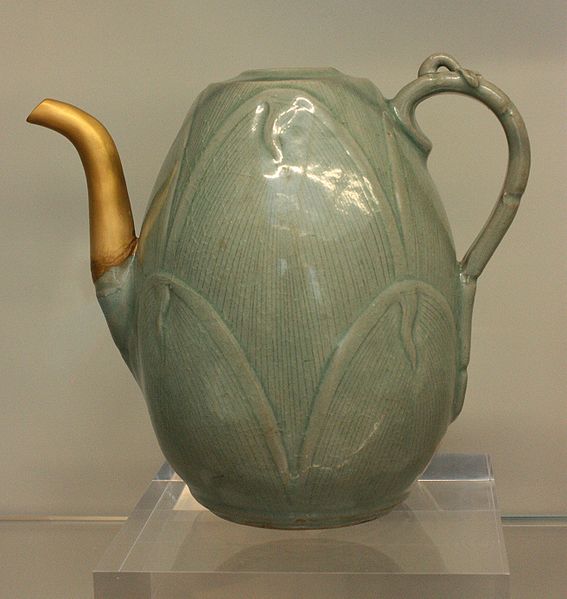
Celadon Wine Pot
History of Korean Ceramics
The Three Kingdoms of Korea (57 BC-668 AD), namely Silla, Goguryeo, and Baekie, provided the beginning of Korean ceramic history. Rough domestic wares for the people were produced from numerous kilns. Likewise a number of very sophisticated statues of royal figures, guardians, and horses, equivalent to Chinese Han Dynasty figures, used for domestic and imperial votive shrines, as well as for escorts of the dead in tombs of the nobles and kings, were turned on potter’s wheels, while others were formed using the traditional hammered clay and coil method.
During the nearly five centuries of the Koryô dynasty (918–1392), celadon was the main type of ceramics produced on the Korean peninsula. This exquisite ware was typically covered with clear and highly-vitrified glazes of gray-green color. The color of Koryô celadon owes much to the raw materials—specifically, the presence of iron in the clay and of iron oxide, manganese oxide, and quartz particles in the glaze—as well as to the firing conditions inside the kiln. The combination of beautiful glaze with elegant forms without any surface decoration resulted in exceptional vessels produced during the early part of Koryo celadon production between late 11th Century and early part of 12th Century. After the Koryo potters had perfected their skill of producing perfect celadon glazes, they started to experiment with carved and incised decoration under the sea green glaze.
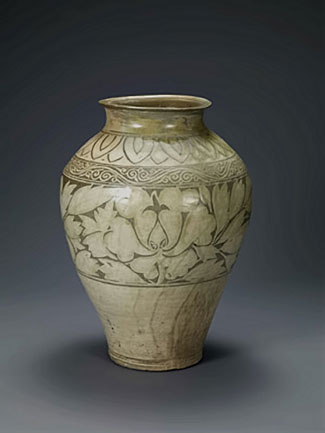
Jar with peony decoration. Korean, Joseon dynasty (1392-1910); first half of the 15th century.
Buncheong with inlaid design. Leeum, Samsung Museum of Art, Seoul.
♦
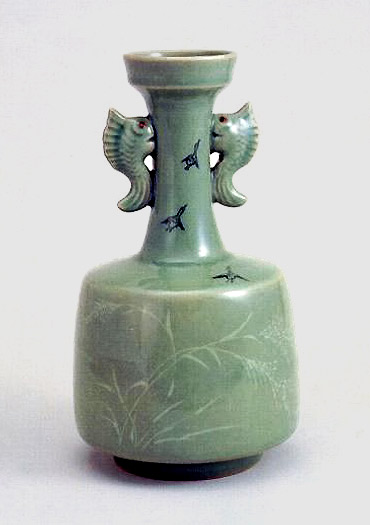
Korean white porcelain became popular in the Royal court of the Choson period. During late 15th Century, the Choson court established a group of kilns called punwon (in today’s Kwangju). Early Punwon kilns in 15th/16th Centur produced white porcelains of elegant shape, impeccable high luster glaze with bluish tint, and thinly potted pure porcelain body for using exclusively in the royal court. Although plain white-bodied porcelains were favored throughout the Choson period (1392–1910), decorated versions of the same wares were also produced in large quantities. The Chinese blue-and-white wares of the Ming dynasty served as one model for Korean potters, who adopted the technique of underglaze cobalt-blue decoration. Unlike its Chinese counterparts, the Choson potters worked closely with court painters to produce vessels with superb paintings rivaling surviving paintings on paper. Korean potters of the 16th century started to experiment with underglaze iron pigment on porcelain. During the Joseon Dynasty, (1392–1910) ceramic ware was considered to represent the highest quality of achievement from imperial, city, and provincial kilns, the last of which were export-driven wares. This was the golden age of Korean pottery, with a long period of growth in imperial and provincial kilns, and much work of the highest quality still present.
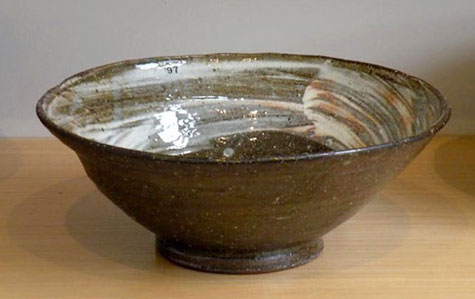
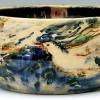
Lee Kang Hyo Buncheong Style Bowl
Hidden between the demise of celadon and the rise in popularity of white porcelain ware, Bun-cheong enjoyed about a one hundred year reign as the most common type of pottery, and was used by both the aristocracy and commoners throughout Korea.
The aesthetics and functions of buncheong ceramics reflect social developments of the beginnings of the Joseon dynasty at the end of the fourteenth century. Most were everyday wares used by people at many levels of society. Later buncheong allowed for increased regional expressiveness and creativity.
As versatile as potters anywhere, the buncheong artisans used many techniques to create their art. Stamping was generally used to produce multiple images on an item. Buncheong artisans reinterpreted traditional iconography, often allowing only the essence of the image to emerge. Asian floral designs, peonies, chrysanthemums and lotus were defined in linear motifs. Animals, too, such as the tortoise on an elephant vessel, were also interpreted as a swash of lines. Occasionally, mythical animals change form under the artist’s guidance. For instance, a dragon and fish are joined as a “dragon fish,” the enigmatic emblem of an anonymous artist.
Bernard Leach (1887-1979), regarded as the father of British studio pottery, stressed that ceramicists of the 20th century ought to learn the techniques of the Joseon Dynasty masters to truly proceed. Admiring the “naked and unaffected freedom” of Joseon Buncheong wares he added that “it is the desire for the wholeness which draws us to the Korean pots.” Renowned British art historian William Honey stated that “the best Korean wares are not only original; they were the most gracious and unaffected pottery ever made. They have every virtue that pottery can have.”
It is noted by art historians that Japanese ceramics became noted the world over after the invasion of the Korean Peninsula by Japan during form 1592 to 1598. This has poignantly been described as The War Of Ceramics because when the Japanese forces left they kidnapped several thousand potters from the Joseon Dynasty to bring home as war trophies. These wonderfully talented artisans became the cornerstone for Japan becoming a producer of fine ceramics. Some of the descendants of these earthenware artisans, including the ” Six families of Imnan Potters” ( referring to the7 year war ) are still thriving and revered as Japan’s top potters.
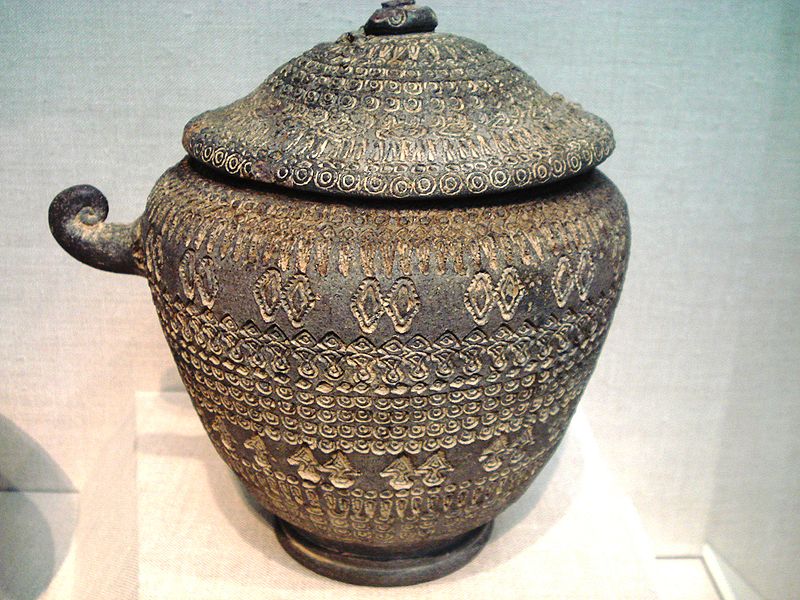
Cinerary urn, unglazed stoneware
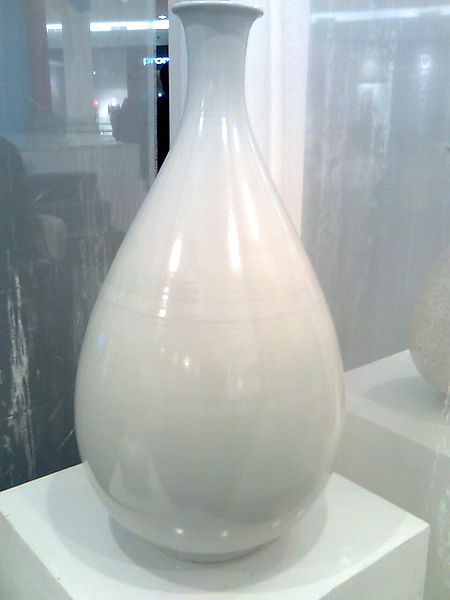
Baekja White Ceramic Vase
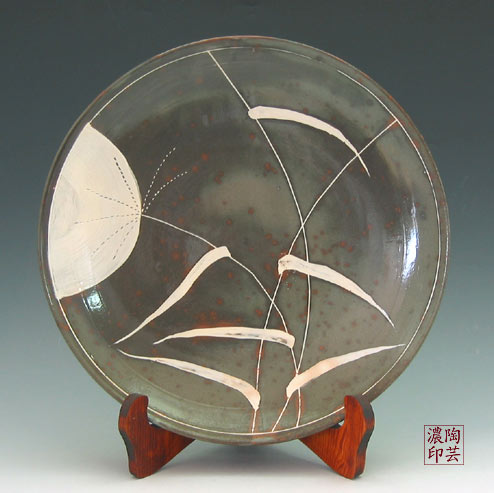
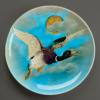
Pottery Plate with Moon and Reed Sgraffito Design
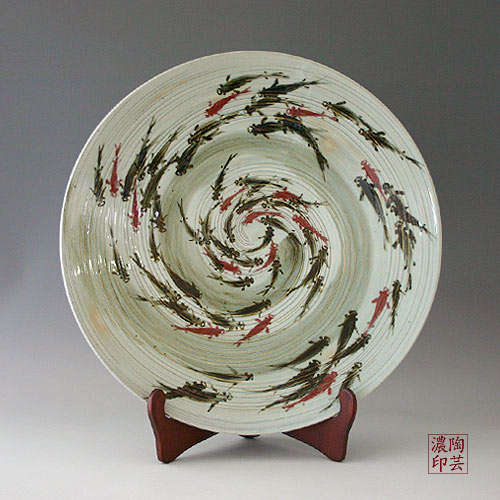
Korean dinner plate with iron black and red copper paint fish design
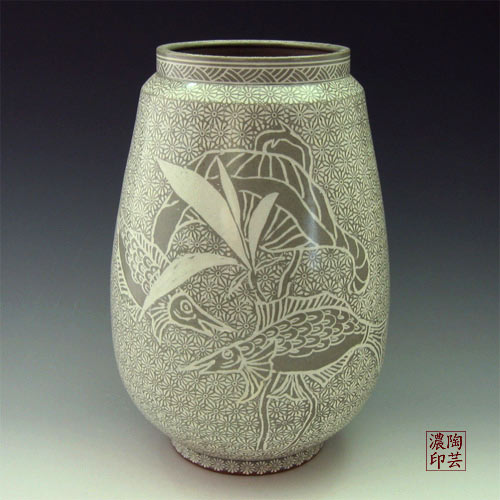
Vase Buncheong Gray with Inlaid Lotus and Fish Design
Traditionally a symbol of auspicious conditions in life, the fish has been one of the most loved motifs for buncheong works. As fish swim freely in groups, have many babies, and fight against a river’s currents as they swim towards its head, this image symbolizes a free, happy, prosperous, successful and peaceful life with many children.
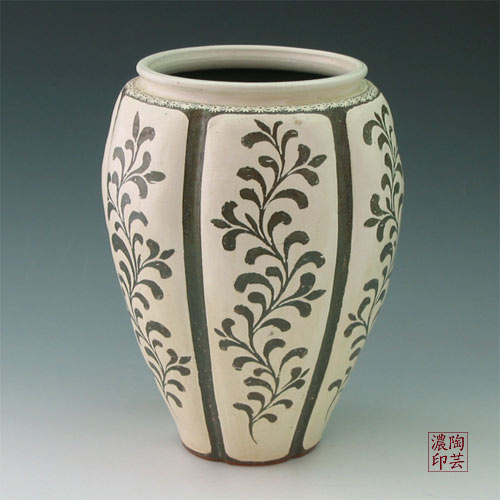
Buncheong Floor Vase with arabesque style decoration
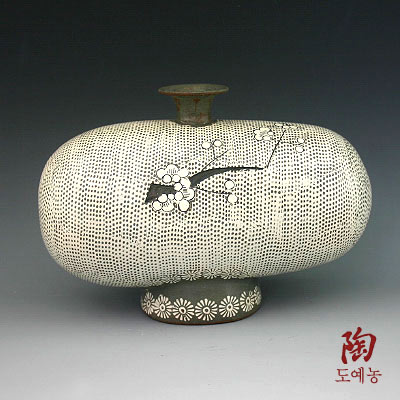 This buncheong pottery flowers bottle features a unique Korean traditional water bottle body decorated with impressed woven mat and Maehwa (Korean plum flower) design. Traditionally, buncheong ware was accompanied with inlaid decorations.
One of the sagunja (“four noble beings”) motifs loved by Korean artists, maehwa refers to the Korean plum blossom that has long been the herald of spring. Korean artists have been fascinated by maehwa, which blooms at the end of winter, and thus have praised it as a symbol of the noble spirit overcoming all hardships.
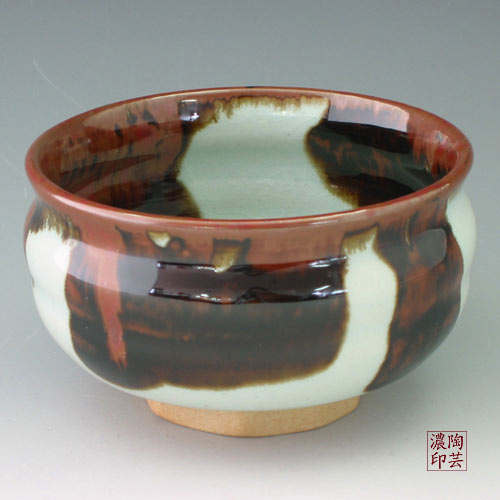
Eosohwan Porcelain Tea Bowl using an The amalgamation of iron red, and brown and black glaze on the surface of white porcelain
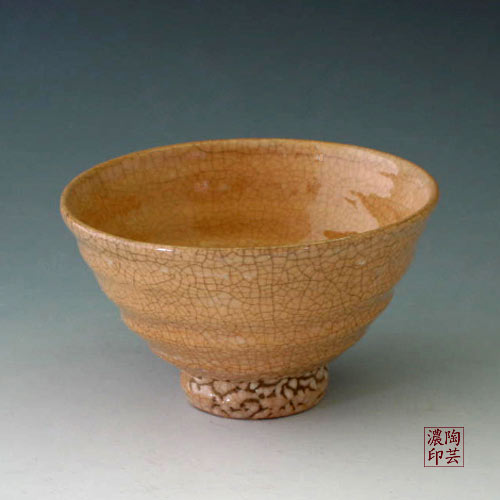
Antique Korean Porcelain Bowl in Light Brown for Tea Ceremony
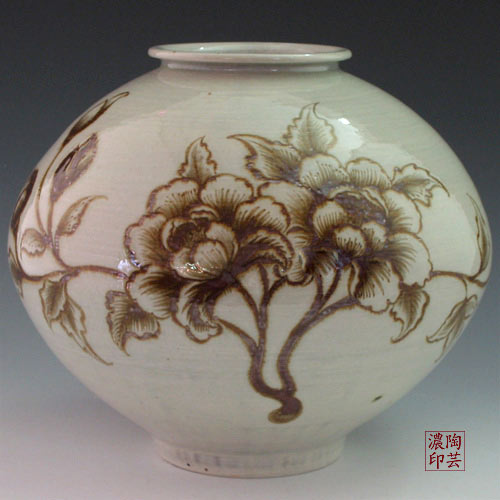
This exquisite buncheong pottery storage jar, the design on which appears like a traditional Korean ink painting,
exhibits a round body swept with a pigment containing iron, giving the effect of paint brushed on paper. The contrast of colors between the brown peony flower and the white background creates a delightful scene to look at. The fully open peony blossom is traditionally a symbol of wealth and nobility.
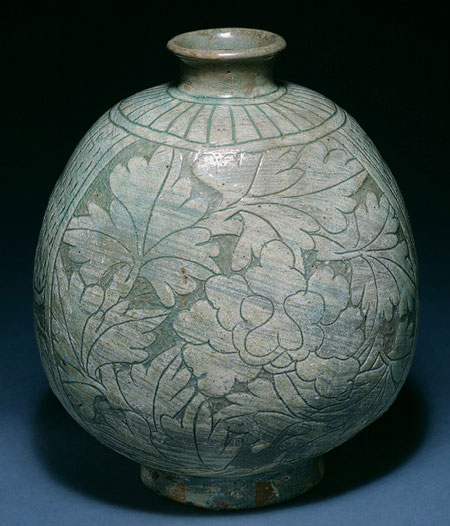 Flask-Shaped Bottle, Joseon dynasty (1392–1910), late 15th century
Korea
Stoneware with sgraffito decoration of flowers under buncheong glaze. ( Met Museum )
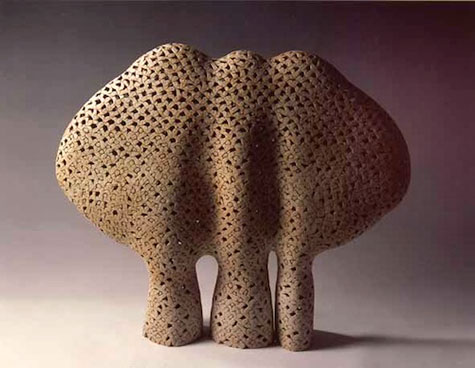 Contemporary Korean Ceramic – ‘Form Series 1’ – Guac Roh Hoon ( V & A Museum )
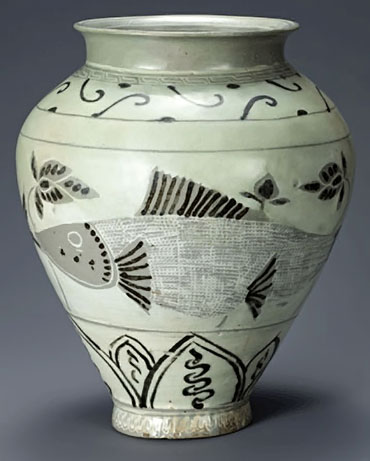 Korean National Treasure No. 787 uses inlay, stamping and iron painting to create the design of fish and lotuses. ( Leeum, Samsung Museum of Art, Seoul. )
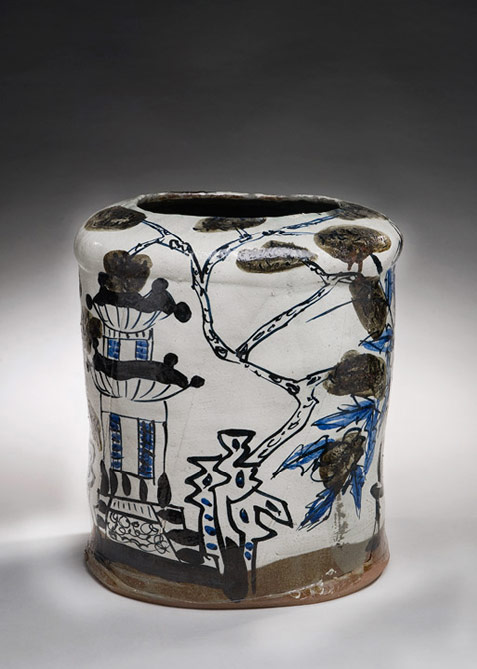
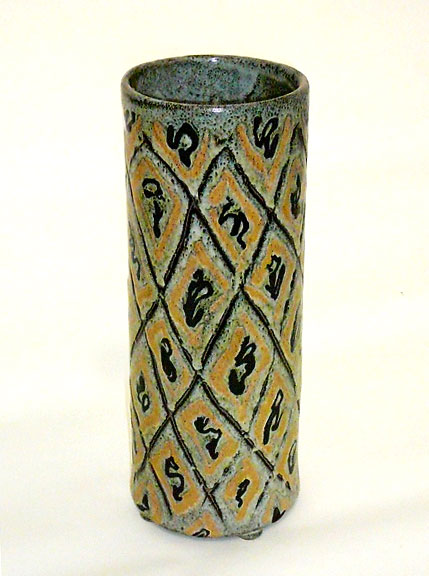 Korean Hand thrown reduction fired stoneware cylindrical vase.
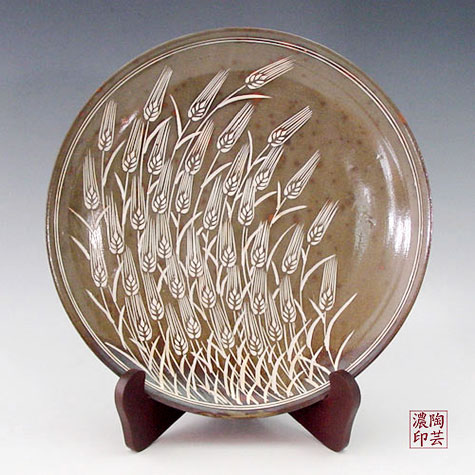
Buncheong pottery cake plate is elegantly decorated with a ripe barley design
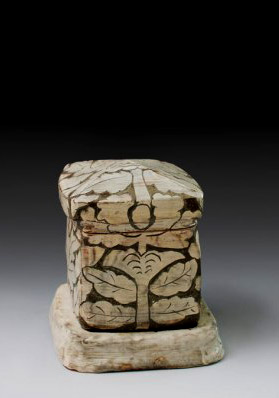
Lee Kang-Hyo
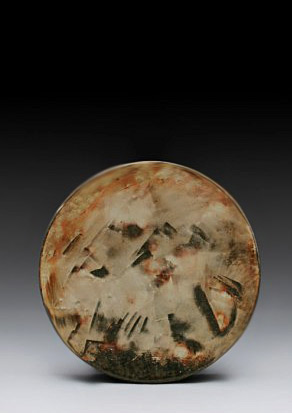
Lee Kang-Hyo
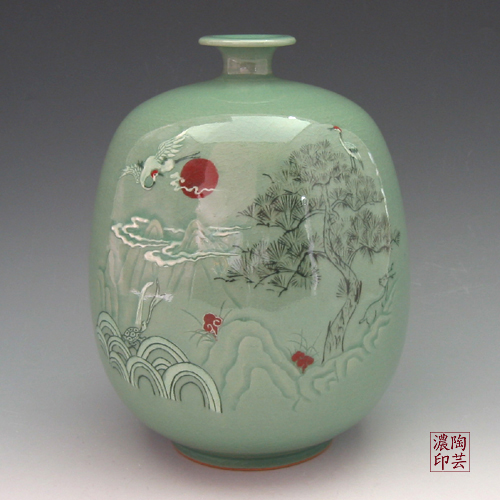
Porcelain Water Bottle with Celadon 10 Creatures of Longevity Design
Inspired by the belief in a Taoist utopian world resided by Taoist elders who had found the secret of eternal life, ancient Koreans revealed their dreams of such a world through the 10 creatures. These symbols significantly impacted the lives and thoughts of the Korean people, from royalty down to common folks, and appeared in numerous objects and places including walls, paintings, poetry, proverbs, furniture, personal belongings and ornaments.
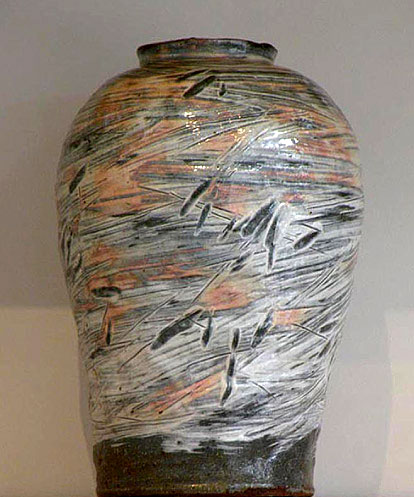
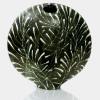
Lee Kang Hyo Buncheong Style Vase
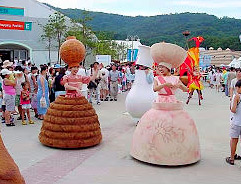
Korean Annual Pottery Parade
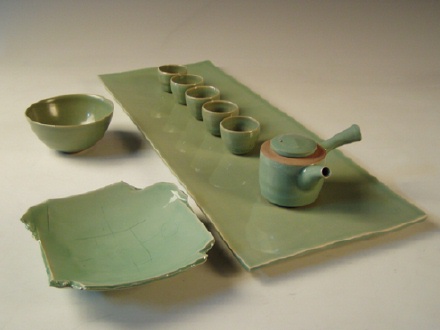
Korean ceramics on display at the Vessels at the KCC
London
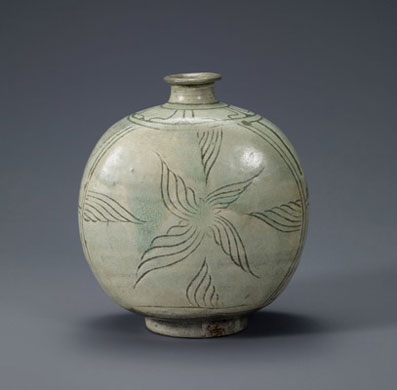
Flask-shaped bottle – Korean, Joseon dynasty (1392-1910); second half of the 15th century.
Buncheong flask bottle with incised design.
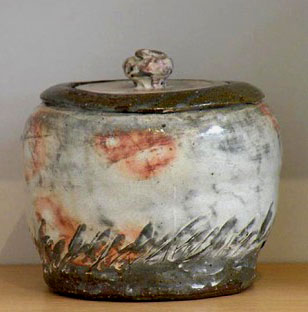
Lee Kang Hyo
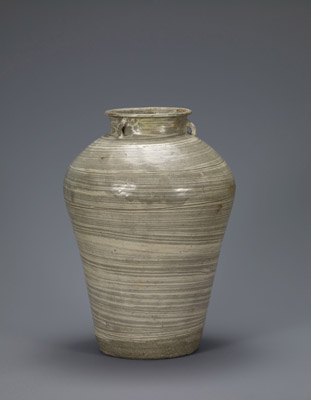
Jar. Korean, Joseon dynasty (1392-1910); 16th century.
Buncheong with brushed white slip. Leeum, Samsung Museum of Art, Seoul.
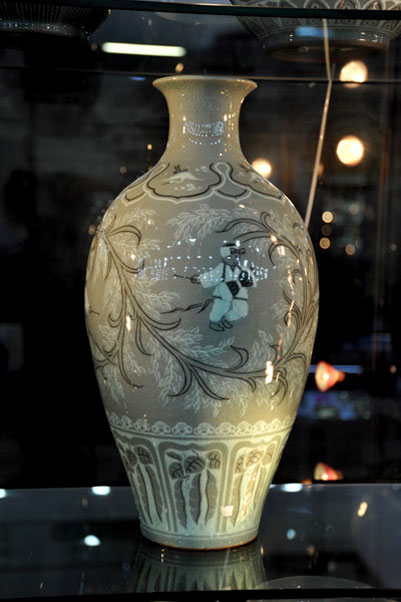
Minye exhibition hall
( Image – Brian J. McMorrow )
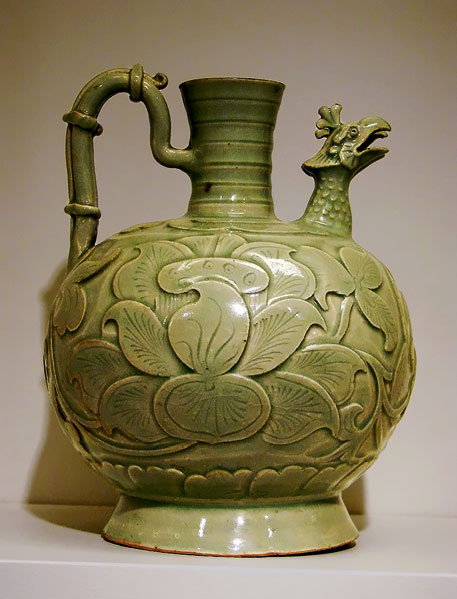
Korean Phoenix ewer Jug – Guimet Museum, France
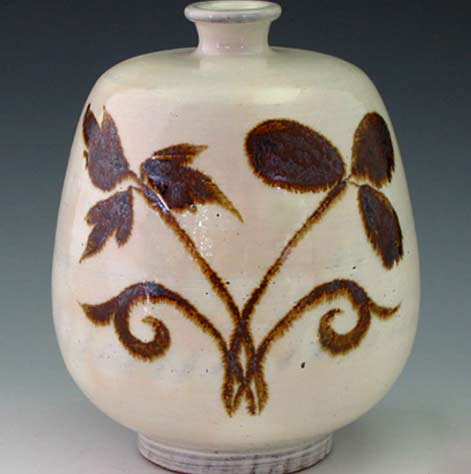
Buncheong pottery leaf bottle, iron painted decoration
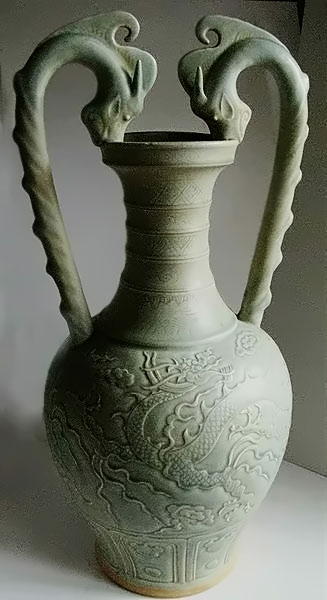
Song or Yuan celadon dragon handled vase
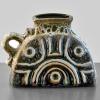
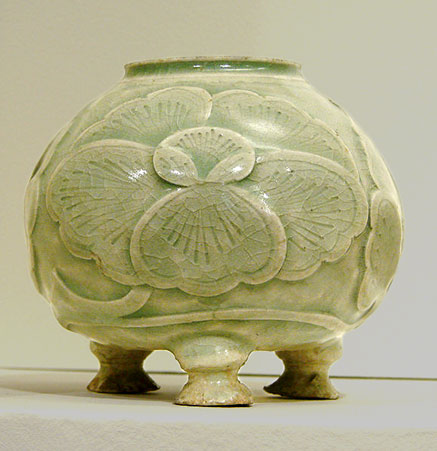 Korean Tripod Pot
Guimet Museum, France
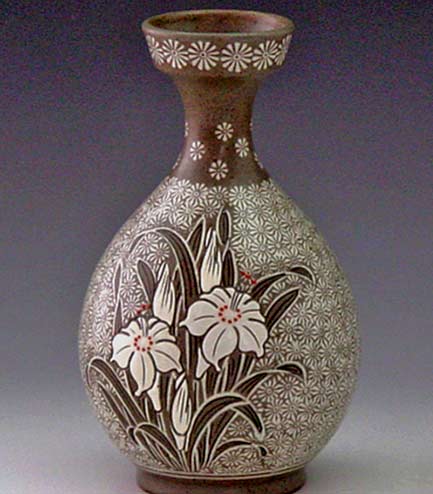
Buncheong bottle













9 Comments
i realy like the korean potterry
Hi
Do you have Australian distributor or agent/office for water filter element? I live in a suburbs of Sydney, Australia.
Thanks
this ceramics are truly a treasure most especially for students like me. I’m studyibg east asian studies here at York univ, Toronto. we are going to do report of what we saw at royal ontario museum. those potteries are extremly precious. thank you for posting . I learned what I should know.
Wow, this is excellent! I desire to connect with you to broaden my understanding. As a researcher, I believe your website is a valuable resource that I will continue to use
Warm regards
Very nice pieces. Perhaps you can help me with part of my collection. Being self taught with T.B.I. and the P.T.S.D. that comes with it, I do have difficulties learning new things. Do you know anything about a process that would seem to involve ‘silvering ‘ scrafitto work? The style reminds me of Tang metalwork. That is one of many questions. I would appreciate ideas. Thank you, John
Just wanted to compliment your website for being a source of exquisite ceramics and valuable information. It especially enjoy seeing and learning about celadon ceramics of Korean and Japan.
I was doing some research for my art history course and appreciate coming across you website as a result. I will look forward to visiting your website often. Thanks!
this web site is so cool there is so much to learn about poter on this page
good
I learned a lot about the aesthetics of Korean ceramics. I came by this website because I plan to make some ceramics made from airdry clay inspired by korean pottery designs. 🙂