
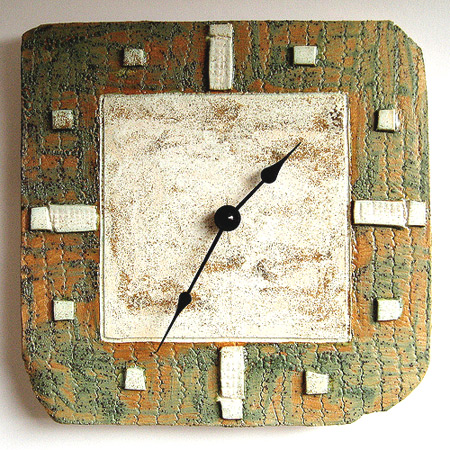
 ILEA ceramics wall clock
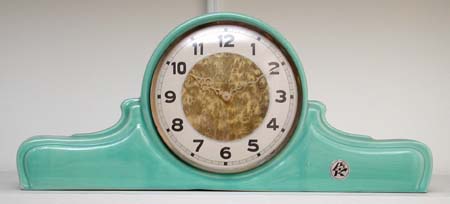
Jade green bakelite mantle clock
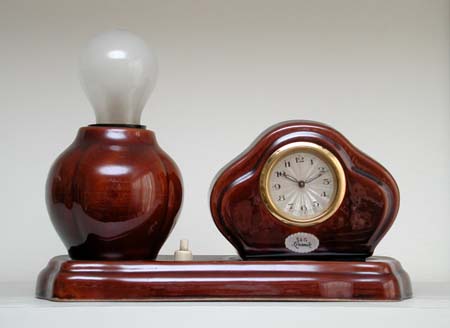
Maroon mantle lamp clock
Demand for clocks and wrist-watches have generally changed due to the use of cell phones and computers to keep track of time. There was a time when the decorative clock was the focus point in the house. As a decorative piece, the display of mantle/wall clocks probably peaked around the period between the two Wars. Indeed up to the middle of the 19th century, a clock was an expensive object because its clockwork was hand made.Their possession was thus reserved for the elite. In the Twenties a significant industry of the faience clock was developed in Belgium and North of France. ( Faience is a glazed non-clay ceramic material that is composed mainly of crushed quartz or sand, with small amounts of lime and either natron or plant ash. This body is coated with a soda-lime-silica glaze. )
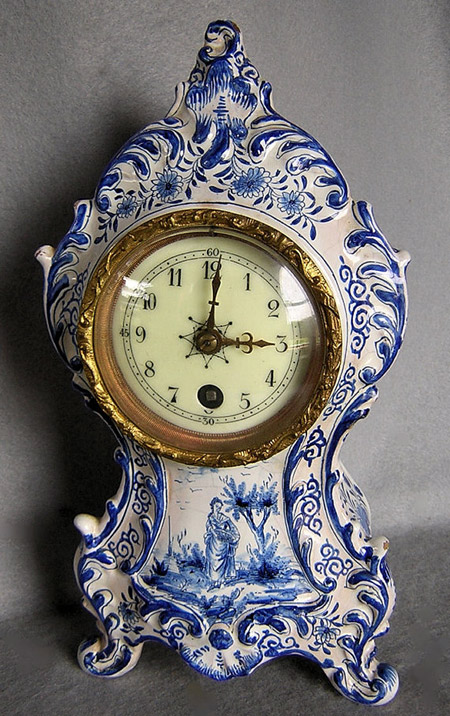 Rare antique French faience Majolica clock
These clocks became the feature display in the home and took pride of place on the mantelpiece. They were quite often accompanied with two sidepieces, vases or cups. Alarm-clocks started to be produced industrially around 1850; but it was only at the beginning of the twentieth century that clockworks, manufactured in the Black Forest and France, became really cheap. Ceramic (faience) was then the inexpensive “plastic” material in the ceramic producing areas and it was chosen to dress these clockworks. Hence clocks became visually appealing and affordable to everybody. The clock shapes of that period sometimes recalled that of middle-class bronze or marble clocks; some beared animals or peoples sculptures; others referred to the Art-Deco architecture or to Greek temples. Their decorations were also infinitely varied, often very colored, sometimes extravagant. Some imitated marble or stone, others refered to modern decorative styles, to Chinese or Dutch porcelains, to traditional tableware or to avant-garde modernistic painting.
France was very instrumental in popularizing the Art Deco style of that era in the design of the mantel clocks. In France, Belgium and Czechoslovakia there were several ceramic factories that specialized in the production of these mantel clocks. After the WW2 the popularity of the ceramic mantel clock declined due to its labor intensive production costs and the mass production of the wrist watch.
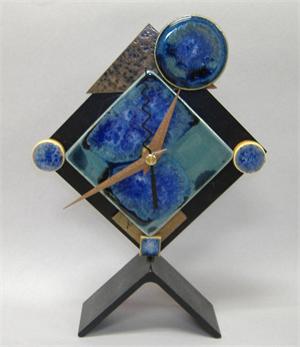
Aqua Blue Burst Diamond Desk Clock with fabulous ceramic clock face by Marc’s Studio
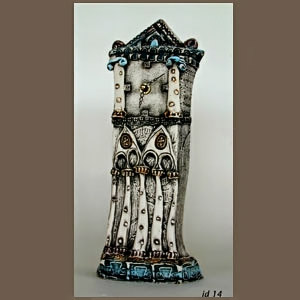 Handbuilt ceramic clock by Lisa Pritchard Ceramics. The work is predominantly slab built with molded additions.
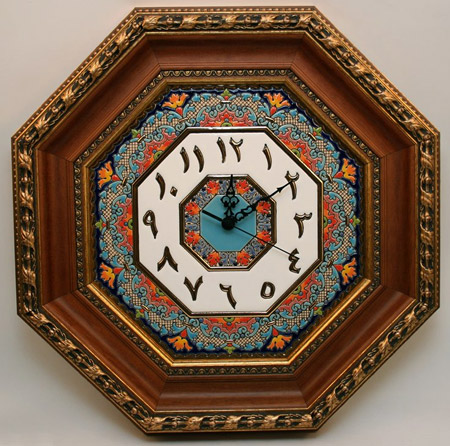
This 13-inch square ceramic face clock is an excellent example of the ‘cuerda seca’ tradition. This tradition was introduced to Spain by the Moors at a time when all three major Western religious groups inhabited Spain peacefully. The Arabic character on this clock reflects the Muslim part of this tradition. Each piece is hand-decorated by Spanish artisans using the same techniques as have been used since the 15th century.
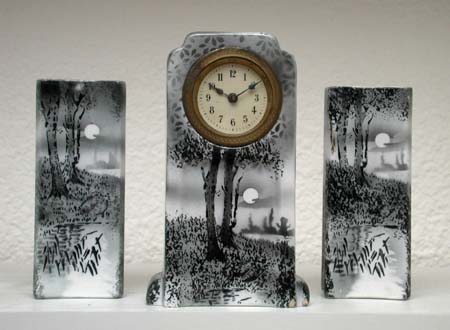
Wittenberg ceramic clocks
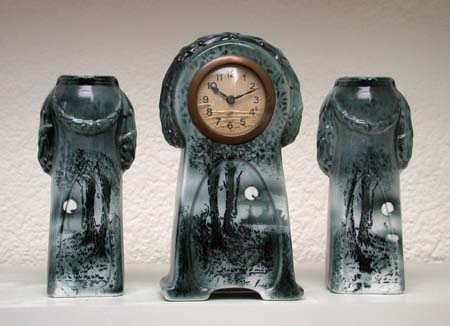
Wittenberg ceramic clocks
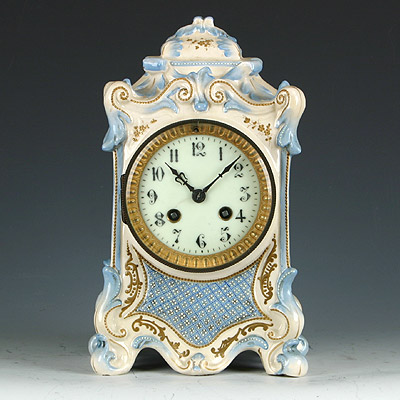
Elegant ceramic antique clock in the rococo style.
This little clock was made by the CJCC clock company of Columbus Ohio.
It is made of ceramic and is beautifully painted and enameled in soft blues and gilt on a slightly off white body.
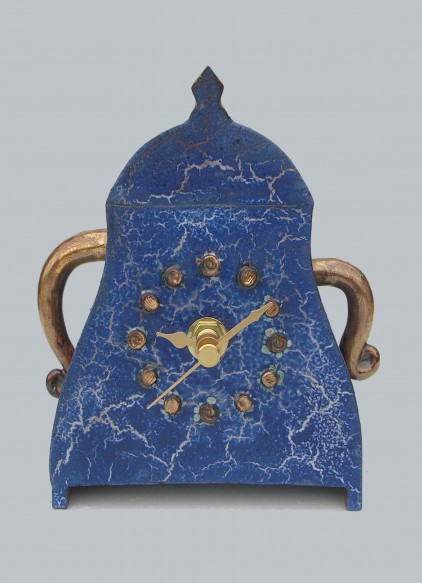
Mollymitten mantle clock
Small blue handbuilt ceramic clock by Sarah McCormack. Multi fired to acheive crackle effect with addition of gold lustre on arms .
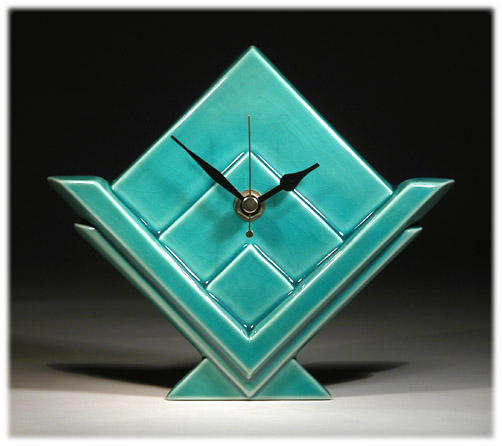 Handmade ceramic wall clock in an Art Deco style. Designed and made by Malcolm and Russell
Akerman of Echo of Deco.
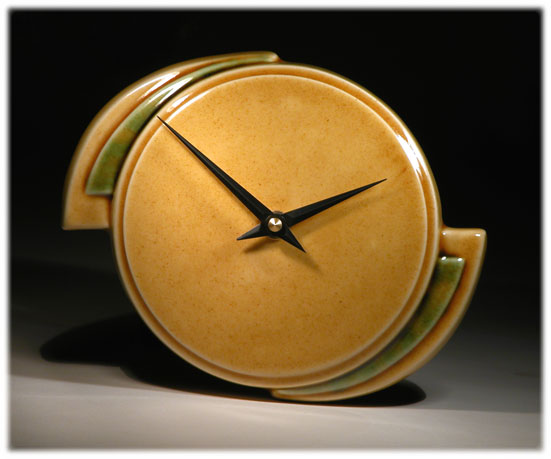
Echo of Deco ” Landspeed ” clock
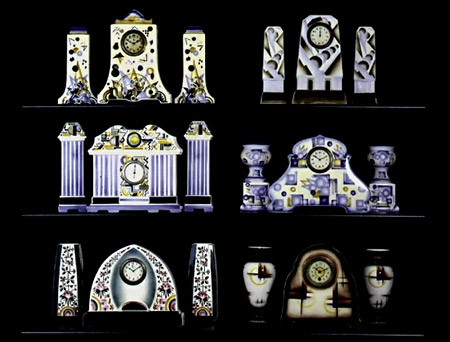
A collection of ceramic fasience Art Deco clocks from the Clockarium Museum in Belgium.
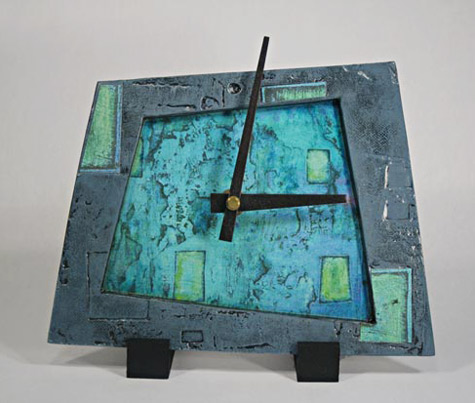
Whimsical Slate Blue Clock by Eileen Young
Hand-made ceramic clock using hand-cut porcelain tiles.
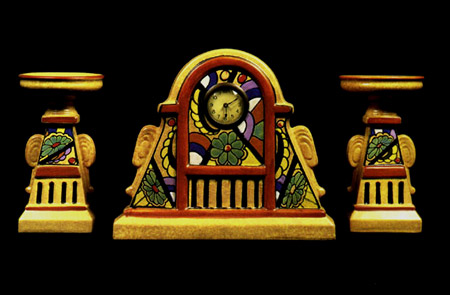
Fasience Art Deco clock from the Clockarium
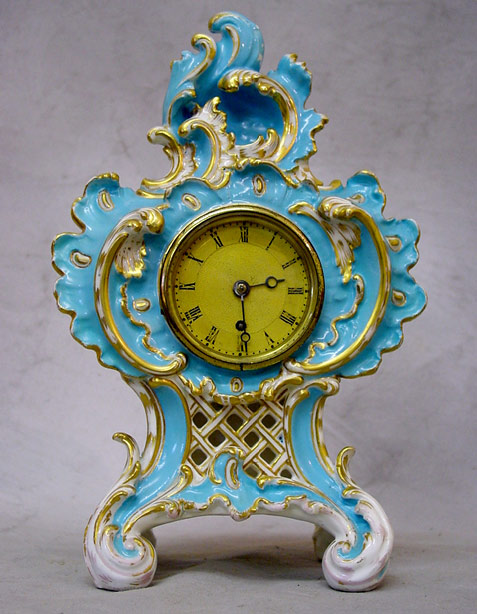
English Coalbrookdale porcelain clock. Circa 1830
Gavin Douglas Antiques
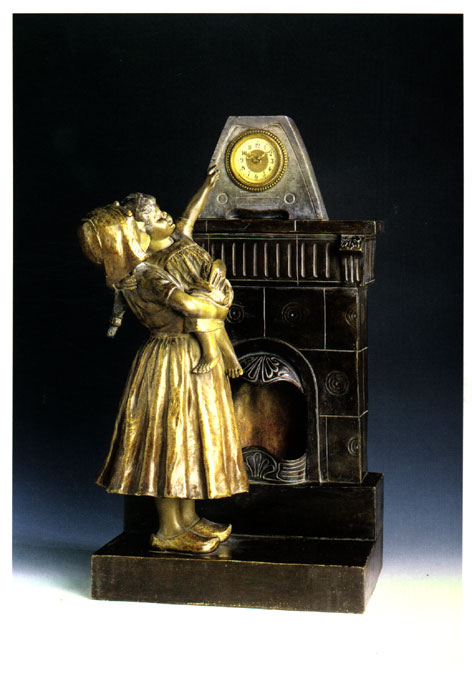 Ceramic clock styled to look like metal.
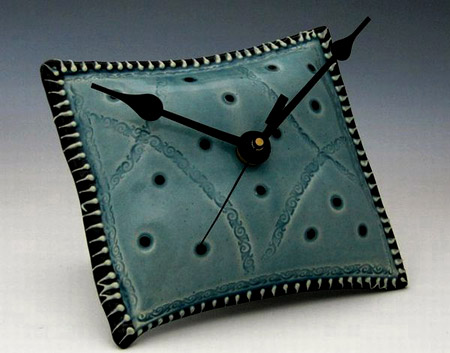
Pillow shaped ceramic clock by Creativewithclay
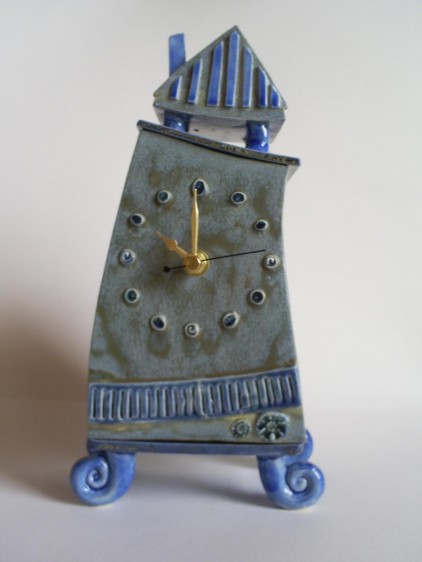
‘Blue House Mollymitten’ – Sarah McCormack.
Ceramic Clock Hand built from earthenware clay in 3 parts middle section and lid lift away from base.
The piece was fired 3 times finishing with a lustre firing of bright gold.
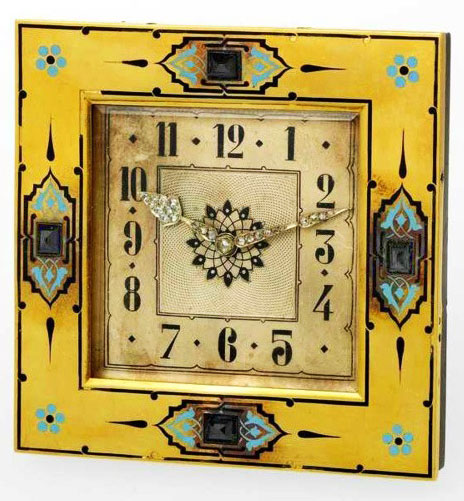
Vintage Cartier 1930 Art Deco Clock
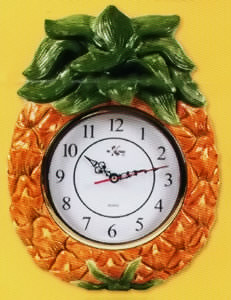
Pineapple wall clock
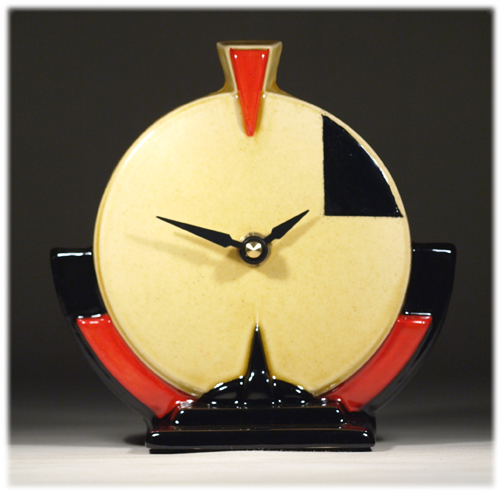
Amber Custom Scientist clock by Echo of Deco
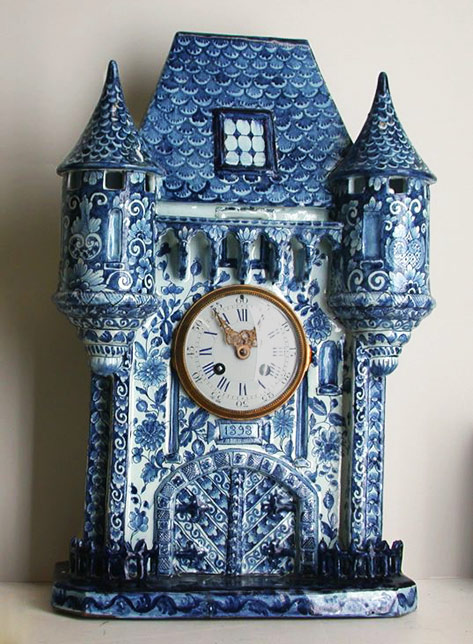
French Clock 1893
( ARTIC )
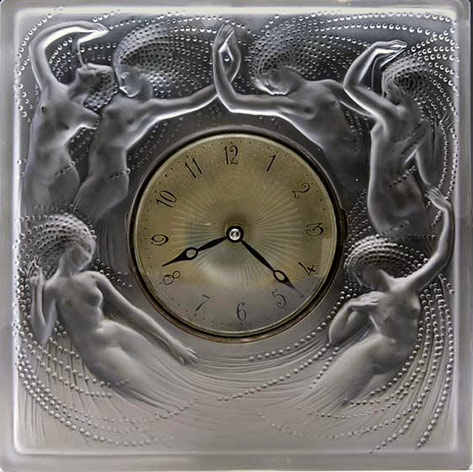
Rene Lalique ‘Sirenes’ Clock – 1928
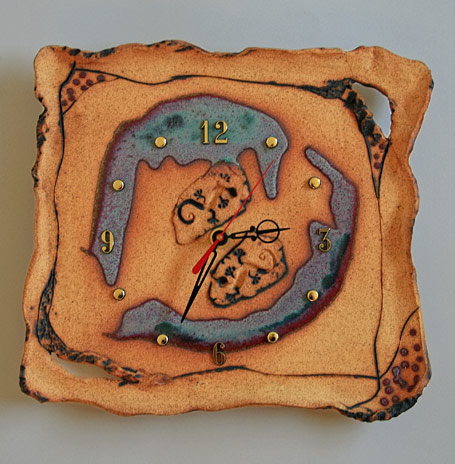
Wonderful abstract clock from Cronulla Pottery
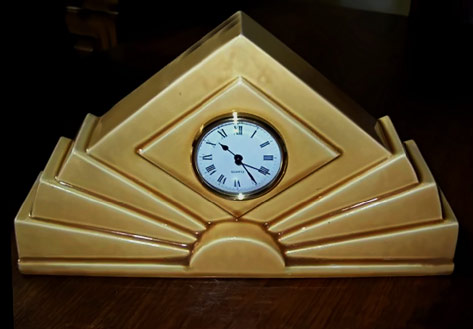
French Art Deco pottery clock – Saint Clement
( DecoDave )
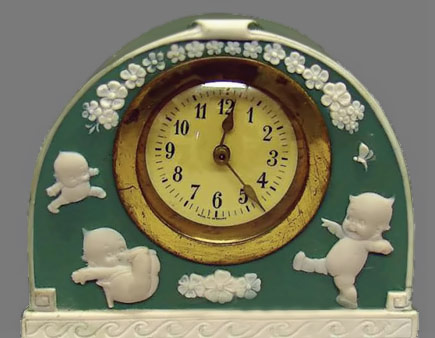
Antique Porcelain Kewpie Clock – Rose O’neil , Germany
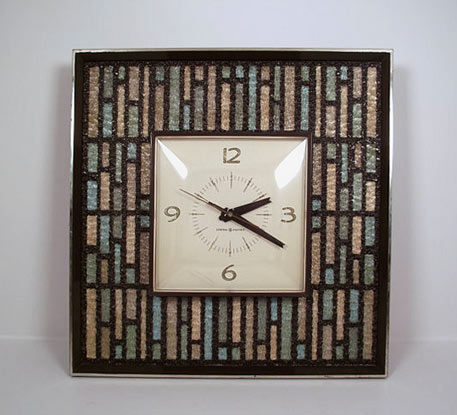
Vintage 60s General Electric Wall Clock Mid Century Modern
( Retro Re Run )
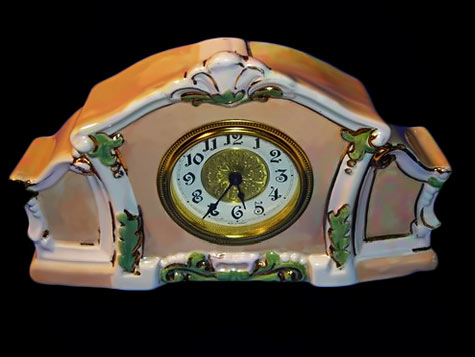
Vintage Holland Mold Porcelain Clock, Mercedes Wind Up Movement – Germany
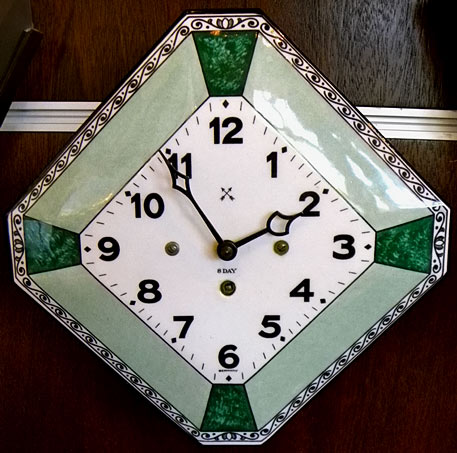
Classic German Art Deco Clock – 1920’s
( Art Deco Collection )
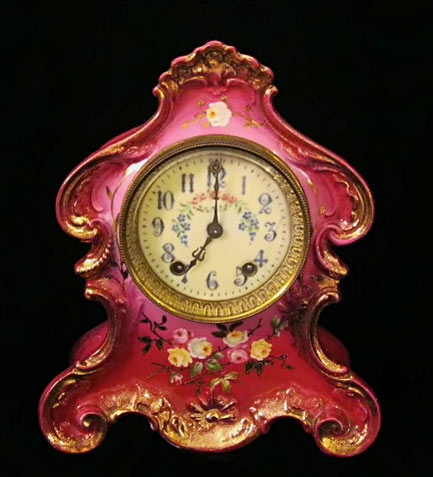
Waterbury Porcelain Clock – circa 1900
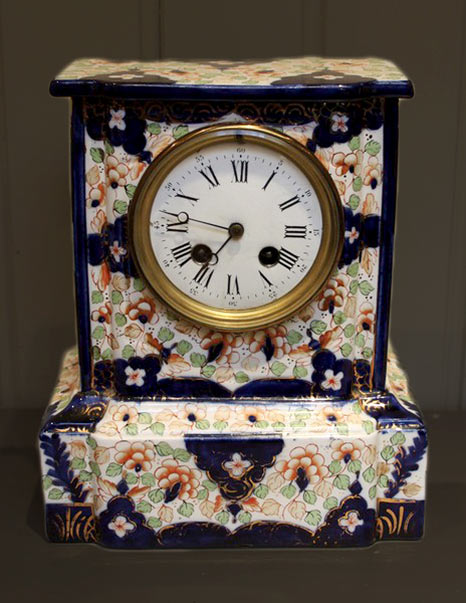
French ceramic mantle clock
( onlinegalleries.com )
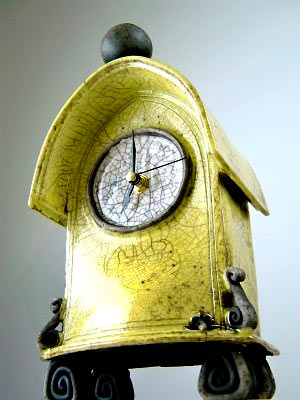
Ian Roberts
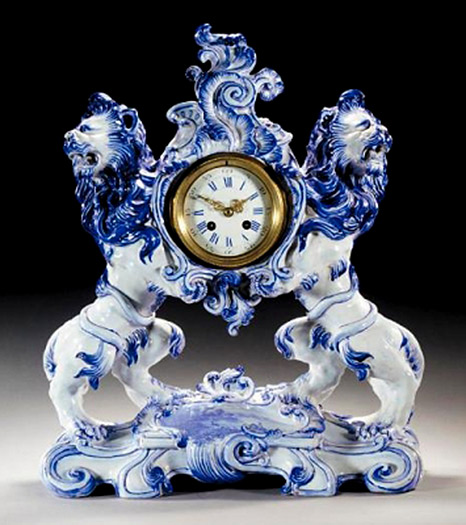
1895 Ceramic Clock
Sothebys
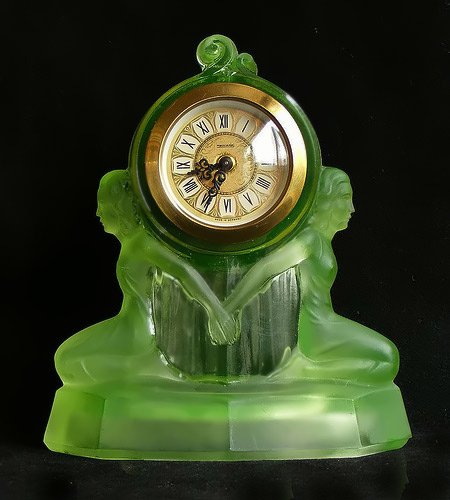
August Walther & Sohne “Windsor” green glass clock
◊




















































3 Comments
AWSOME
would like to know price of clocks
Can you tell me anything else about the French rococo revival clock? I inherited the same one and I don’t the price or anything about it. Thank you
One Trackback
[…] see Ceramic clocks […]