
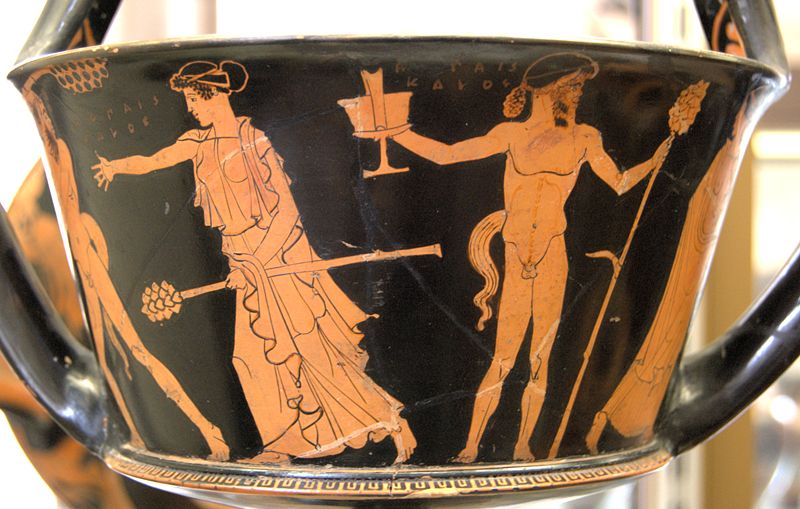
 Ancient Greek pottery is one of the most tangible and iconic elements of ancient Greek art. The colored vases and pots of this unique era have survived in large numbers and are now highly prized as collectibles. Most surviving pottery consists of vessels such as amphorae, kraters (bowl for mixing wine and water), hydria (water jars), libation bowls, jugs and cups. Painted burial urns have also been found. Miniatures also were produced in large quantities, primarily for use as offerings at temples. The history of ancient Greek pottery is divided stylistically into three periods: The Protogeometric from about 1050 BC. The Geometric era of around 900 BC and the Archaic period around 750 BC. . The range of colors that could be used in their pottery was restricted by the technology of firing: black, white, red and yellow were the most common .The fully mature black-figure technique with added red and white details and incising lines and details, originated in Corinth during the 7th century BC and flourished until the end of the 6th century BC. The red-figure technique invented in about 530 BC, reversed this tradition, with the pots being painted black and the figures painted in red.
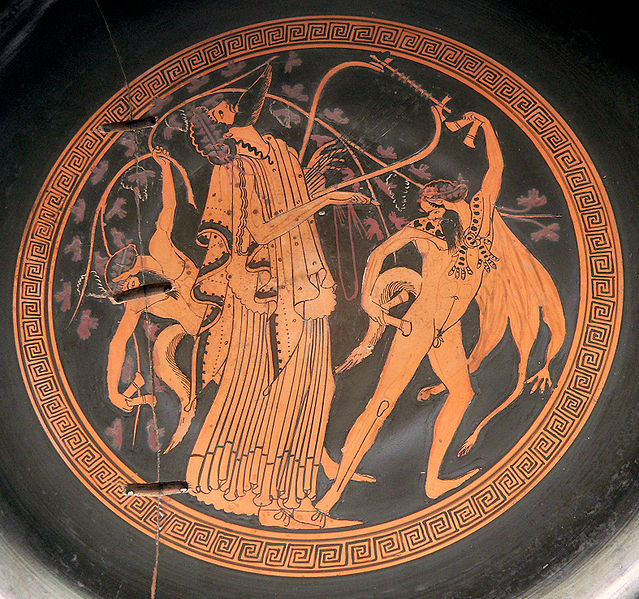
Despite the technical limitations the Hellenic potters faced with their early productions, it didn’t seem to effect their ability to create powerful artistic statements with their wares, depicting vivid figures filled with life and movement. The detail of their Geometric pottery is quite remarkable, albeit somewhat rigid but I feel this led to a polarity in the sense that the images of their Gods became more realistic and life-like.
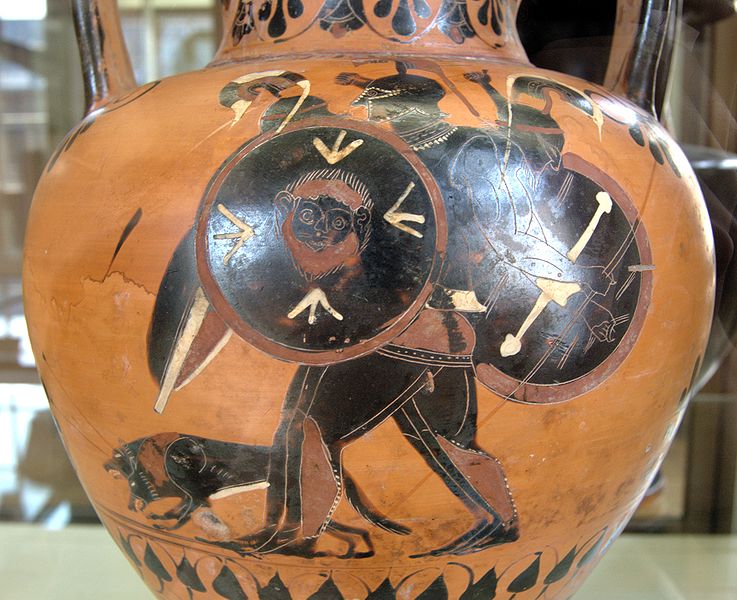 In Greek mythology, Geryon was a winged giant made from three entire human bodies conjoined at the waist. Geryon lived on the island of Erytheia, in the far west of the Mediterranean.
◊◊◊
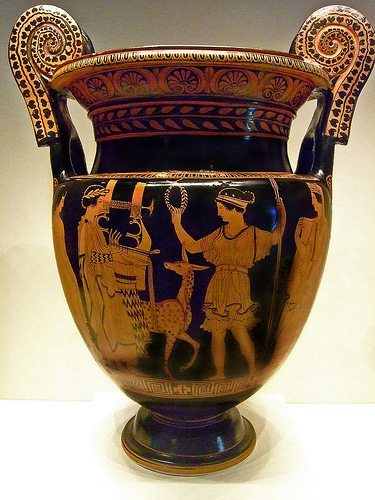
Unlike the unusual deity’s of the Egyptians, Mesopotamians and Persians, the Greek Gods and Heroes were more based on an accurate human form, generally portrayed as larger in size, more powerful and displayed as models of human perfection. Beginning in Attica, the Greek potters began painting narrative scenes from their Gods and Heroes like Apollo and Dionysus. This is the reason why pottery art improved so dramatically in the 5th and 6th centuries. Their devotion to their deity’s motivated them to create the most natural looking depictions of their God or Hero that was possible. The realism and dimensionality achieved were beyond that of any civilization hitherto. This era of Greek pictorial art was essentially the beginning of European Drawing and Painting. By the beginning of the 5th century , pottery-making in Greece attained a level of mass production that led to exports to Egypt, Palestine, Italy, Spain, Sicily and other Greek colonies. The more ceramics became an industry the less pottery painting was represented as an important art form of ancient Greece. It is a stroke of fortune that their pottery had the durability to survived the ravages of time, unlike their wood and paper art, and stood up to become a priceless historical documentation.
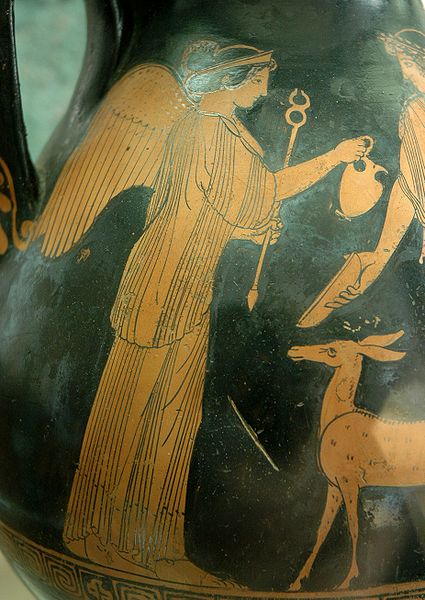 Winged female figure holding a caduceus : Iris (messenger of the gods) or Nike (Victory). Detail from an Attic red-figure pelike, middle of 5th century BC.
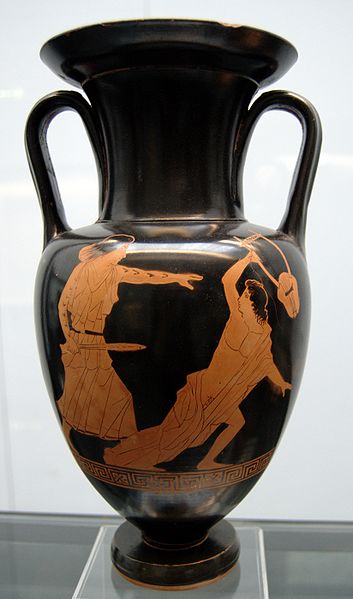 Death of Orpheus, amphora, circa440 BC
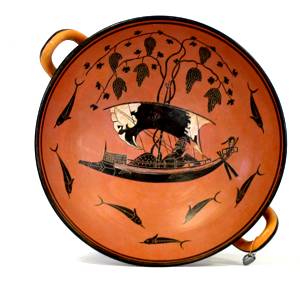
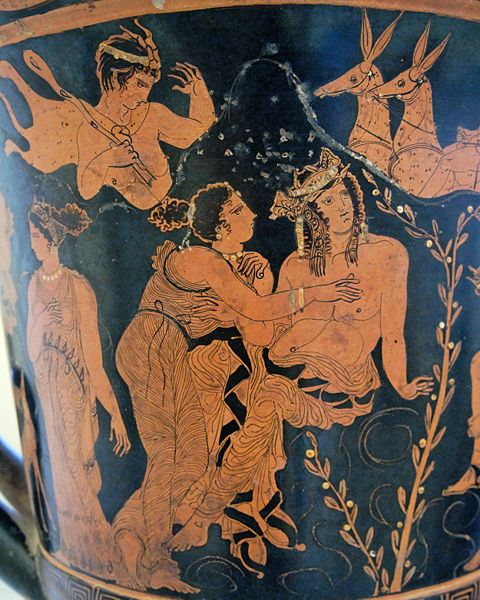 Phaon and Aphrodite. Attic red-figure calyx-krater, 420–400 BC. From Agrigento.
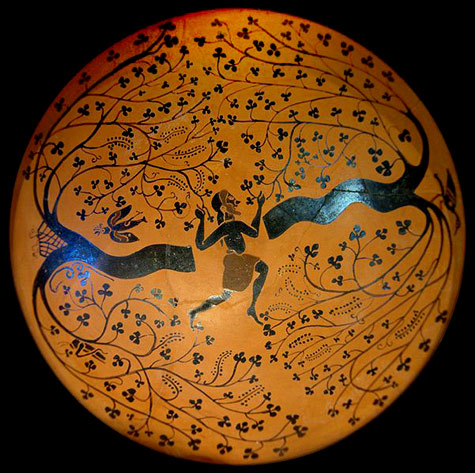
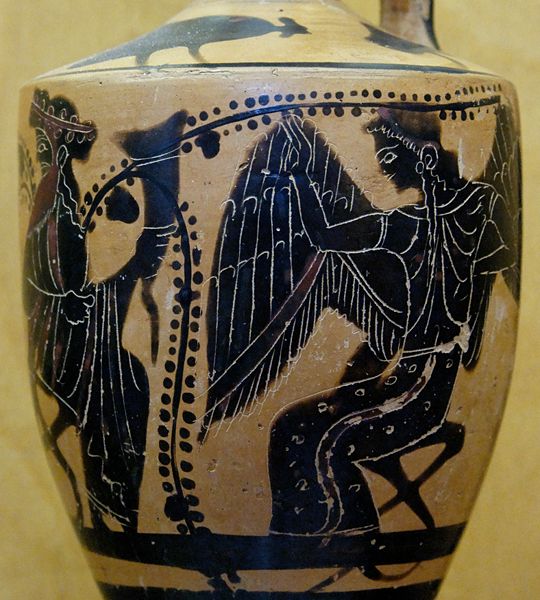 Greek ceramic Dionysus winged figure.
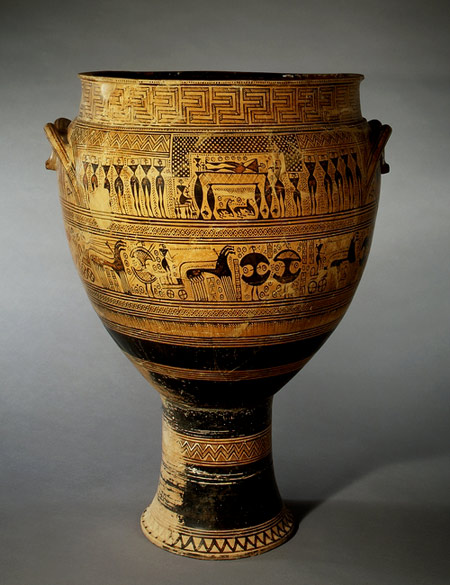 Terracotta Krater Met Museum, NY.
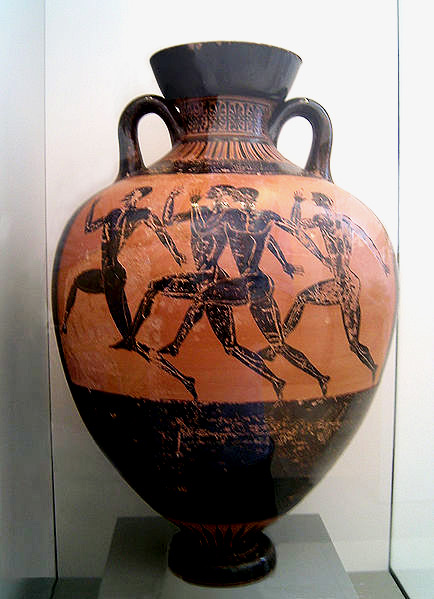
Greek depicti0n of Olympian Athletes Competing painted on a Panathenaic prize amphora.
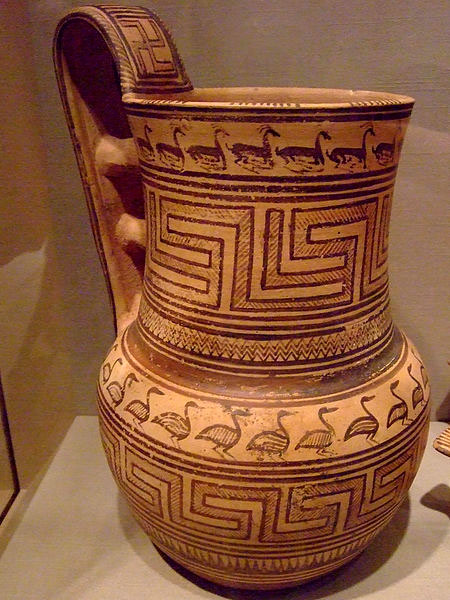
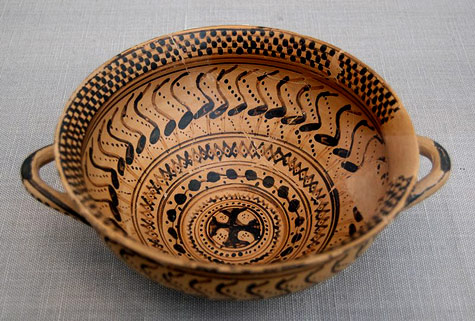
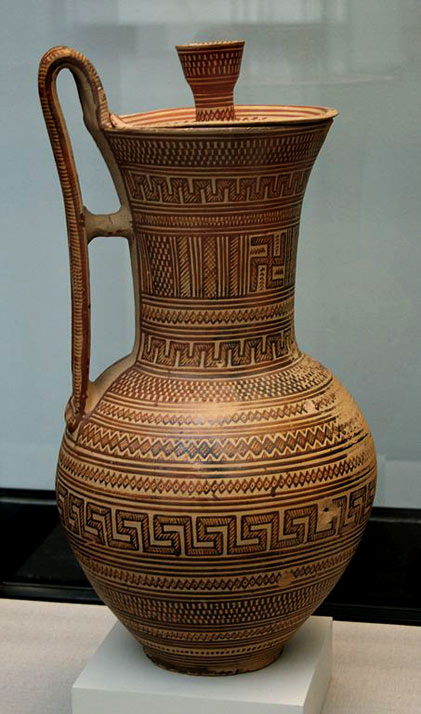 The geometric style is a style of Greek art that developed towards the end of the Dark Age, roughly between 900 BC and 700 BC. It developed in Athens and spread through the sea trade routes in various cities of the Aegean area. Evidence of this decorative style of art-have survived and are mostly represented by decorations on ceramic vessels and ceramic objects. It is thought that the jars were originally dedicated to women, since their task was to collect water, while the kraters were dedicated to the men who poured the wine .
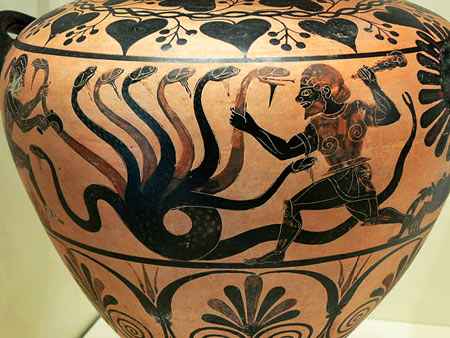 Heracles fighting the Hydra of Lerna on a hydria by the Eagle Painter, c. 525 BC, now in the Getty Villa, Malibu, California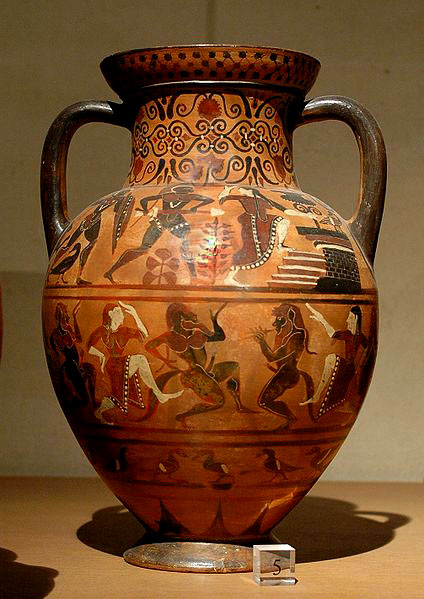








































One Trackback
[…] (images via: Art Forms by Yianni Nomiko and Venice Clay Artists) […]